
Load Calculation
We calculate your actual electrical load based on appliances, HVAC, and future plans. NJ Uniform Construction Code requires this for service changes. It's how we size the right amperage for your home, not a guess.
100-amp to 200-amp service upgrades. Federal Pacific and Zinsco panel replacements. Subpanels for finished basements, EV chargers, and heat pumps. Most upgrades done in one day with permit and JCP&L coordination handled.
A huge share of the housing stock across Flemington Borough, Raritan Township, Readington, Clinton, and the rest of the county was built between the 1950s and 1980s, when 100-amp service was the standard and a home's biggest electrical loads were a stove, a clothes dryer, and a window AC unit.
Today's homeowner is running a heat pump, a hot tub, a finished basement, an EV charger in the garage, and a refrigerator that draws three times what the 1970s version did. The 100-amp panel that worked fine in 1978 has run out of room, runs out of breaker slots, and in many cases is one of the Federal Pacific Stab-Lok or Zinsco panels that shipped into thousands of Hunterdon County homes during the construction boom and have since been recognized as fire hazards.
That's why panel upgrades are the single service we get called for most often across the county. We've done hundreds of them, from one-day swaps in Raritan Township ranches to full service-mast replacements after storm damage in rural Readington.
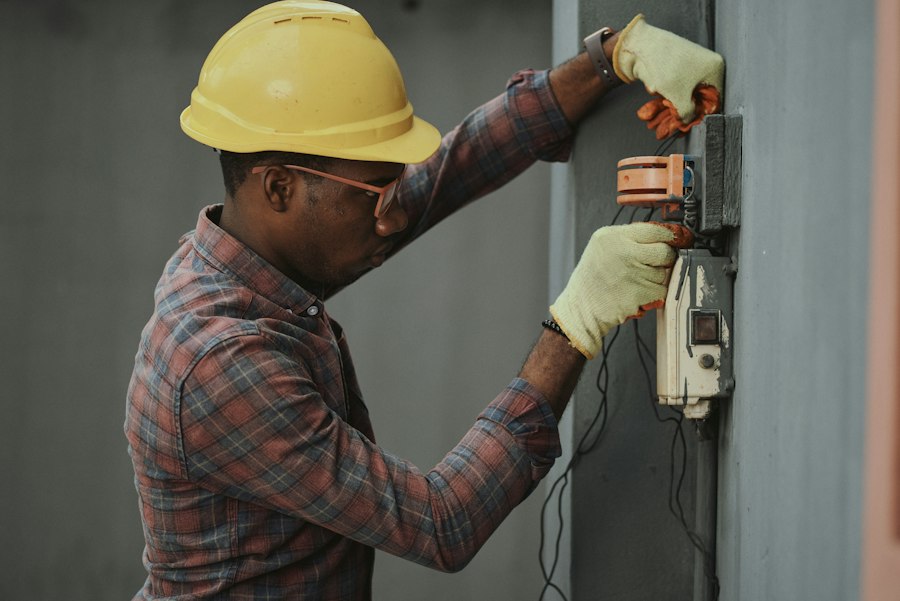 200-amp install · Flemington, NJ
Not every old electrical panel needs replacement, and not every modern home has enough capacity for what's coming next. The checklist on the right gives you a quick read on where you stand.
Check any of the indicators that apply to your situation. The more you check, the stronger the case for an upgrade. We'll give you an honest answer based on what you select.
For a real assessment with a written quote, call (908) 751-4227. We'll come look at the actual panel.
Based on what you selected, your panel likely needs to be replaced.
Call (908) 751-4227A panel upgrade isn't just swapping a box. Here's the full scope of what we handle from start to finish.
We calculate your actual electrical load based on appliances, HVAC, and future plans. NJ Uniform Construction Code requires this for service changes. It's how we size the right amperage for your home, not a guess.
Old panel removed, new panel installed. We use Square D QO, Eaton CH, or Siemens depending on what fits your home. Every breaker is rated for the circuit it protects, every connection torqued to spec.
Service changes require the utility to pull and reset your meter. We schedule the disconnect and reconnect with JCP&L, time it to minimize the outage window, and handle the call so you don't have to.
Every panel upgrade requires a permit and an inspection in NJ. We file with the right construction office (different for each township), schedule the inspector, and hand you the signed-off paperwork.
If your home in Flemington, Raritan Township, Readington, Clinton, or anywhere else in Hunterdon County was built between roughly 1955 and 1985, there's a meaningful chance your electrical panel is a Federal Pacific Stab-Lok or a Zinsco brand. Both were extremely common in NJ residential construction during that period.
Both panels have a well-documented history of breakers that fail to trip during a short circuit or overload. That's the exact thing a breaker exists to prevent. A breaker that doesn't trip allows the fault current to keep flowing, which heats up the wire downstream and can start a fire inside the wall before anyone notices.
This isn't a marketing scare tactic. The risk has been documented in industry studies, recognized by major insurance carriers, and is the reason these panels routinely get flagged on home inspection reports.
Look at the front of your panel. If you see a long vertical label with "Federal Pacific Electric" or "FPE" and breakers with red, orange, or pink handle indicators marked "Stab-Lok," that's it.
Zinsco panels often show colorful breaker handles (red, blue, green, yellow). The brand name appears as "Zinsco," "Sylvania-Zinsco," or sometimes "GTE-Sylvania" on the panel label.
We swap the old panel for a modern one (Square D QO, Eaton CH, or Siemens), upgrade service to 200 amps in most cases, and pull the permit through your township. Usually one day on site.
The most common reasons we get called for panel upgrades across our service area.
A Level 2 home charger needs a dedicated 240V circuit pulling 40 to 60 amps. About 4 in 10 charger installs we do require a panel upgrade first because the existing panel doesn't have the room or capacity. We run a load calculation before quoting.
Switching from oil or propane heat to a heat pump is increasingly common in Hunterdon County, often driven by NJ Clean Energy rebates. Heat pumps draw significant amperage and almost always require a panel with enough headroom, plus a dedicated circuit.
Sometimes the trigger is just the panel itself. A home inspector flagged it during a sale, an insurance carrier asked about it, or the homeowner finally decided to deal with it. We replace, upgrade to 200 amps in most cases, and bring it up to current code.
Finishing a basement or building an addition adds 8 to 15 new circuits between lighting, outlets, HVAC, and dedicated appliance circuits. Most older panels can't fit it. We add a subpanel or upgrade the main service, depending on capacity.
Modern kitchens have dedicated circuits for the range, dishwasher, microwave, fridge, and small appliance counters. Induction ranges and high-end ovens add even more load. A panel from a 1970s kitchen wasn't sized for any of this.
Hot tubs draw 40 to 60 amps on a dedicated 240V circuit, plus GFCI protection. Pool pumps and heaters add their own load. Most existing panels don't have room without an upgrade or a subpanel.
A standard 100-amp to 200-amp upgrade on a Hunterdon County home. Most jobs fit this rough timeline.
Truck arrives, drop cloths laid down, area around the existing panel cleared. We walk through the plan with you and confirm the final scope before any work starts.
We've scheduled the JCP&L disconnect for this morning. The utility tech arrives, pulls the meter, and your house goes off-grid for the duration of the work. Coffee gets cold.
Every circuit gets labeled and documented. The old panel comes out. If we're also replacing the service entrance cable or mast, that happens now too.
The new panel goes in, mounted securely with the right clearances per NEC. Every circuit gets reconnected to the right breaker, every connection torqued to manufacturer spec, and the panel directory updated so future work is easy.
Meter goes back on, power comes back. We test every circuit, GFCI, and AFCI to make sure everything's working before we leave.
The township electrical subcode inspector comes out within a few days to look at the work. They sign off, we hand you the paperwork, and the job is closed out. You don't have to be home for it.
Four things that consistently come up in reviews from customers we've done panel upgrades for.
Every install follows the NJ Uniform Construction Code (UCC) and the latest National Electrical Code. We don't take shortcuts that the inspector will catch.
We handle the meter pull and reset call with JCP&L. You don't sit on hold with the utility. The disconnect is scheduled to minimize your outage window.
We file with the right township office (Flemington Borough, Raritan Township, Readington, Clinton, whichever covers your address) and schedule the inspector. You don't deal with paperwork.
Every panel upgrade gets an itemized written quote on site before any work starts. The price you see is the price you pay. No day-of upcharges.
Under the New Jersey Uniform Construction Code (UCC, N.J.A.C. 5:23), any change to your electrical service requires a permit and an inspection. There are no exceptions for residential panel upgrades.
Each municipality in Hunterdon County has its own construction office that handles electrical subcode permits. We know which office covers which address and file directly with them. You don't make the calls or fill out the forms.
Three of the upgrades we've completed recently. Different homes, different reasons, same approach.
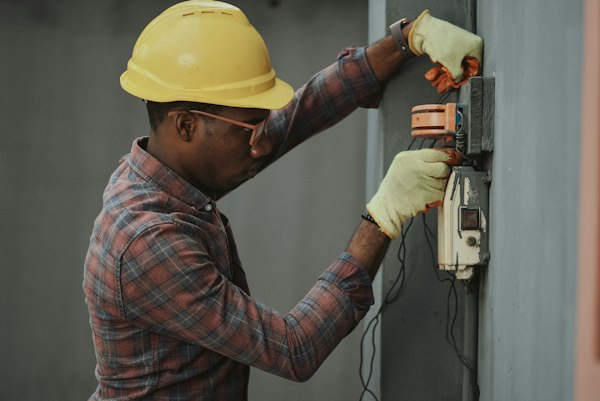 FPE Replacement
1970s split-level near Copper Hill with a Federal Pacific Stab-Lok panel that was flagged on the home inspection. Replaced with a 200-amp Square D QO. Added two dedicated circuits for the customer's planned EV charger. Permit filed with Raritan Township, inspector signed off the next week.
 Service Mast + Panel
1950s home near the Whitehouse Station rail line with a 100-amp panel, a corroded service mast, and a weatherhead that should have been replaced years ago. Replaced the panel, the mast, and the meter base. Coordinated with JCP&L for the disconnect and reconnect.
 Main + Subpanel
Modern colonial off Route 173 finishing a basement with a home office, full bath, wet bar, and a media room. Upgraded the main service to 200 amps and added a 100-amp subpanel in the basement to handle all the new circuits without running every cable back to the main.
We don't quote panel upgrades over the phone. Anyone who does is guessing, because the actual cost depends on factors we can't see from your driveway. What we will do is give you a written, itemized quote on site before any work starts.
What's almost always included: the new panel, breakers, the permit, the JCP&L meter pull and reset, the inspection coordination, and labor. What can shift the price up or down: the condition of your service entrance, whether the mast needs to be replaced, where the panel lives in your house, and how many new circuits you want added at the same time.
For ballpark ranges, the services hub has typical pricing on common jobs.
For a standard 100-amp to 200-amp panel swap, expect to be without power for most of the workday. We typically schedule the JCP&L meter pull for around 8am and the reconnect for early afternoon. If we're also replacing the service mast or the entrance cable, it can run longer. We'll give you a realistic window when we quote.
For most modern Hunterdon County homes, yes. 200-amp service is the practical baseline for a home that runs a heat pump or central AC, has an electric range or dryer, plans to add an EV charger, or has a finished basement. The cost difference between a 150-amp and a 200-amp panel install is small, and the headroom matters as electrical loads keep growing.
Yes. The New Jersey Uniform Construction Code (UCC, N.J.A.C. 5:23) requires a permit and inspection for any service change or panel replacement. There's no residential exception for this. We file with the right municipal office and handle the inspection scheduling. The permit fee gets included in the written quote up front.
Both brands have documented histories of breakers failing to trip during fault conditions. That defeats the entire purpose of having breakers. A breaker that doesn't trip lets fault current keep flowing through the wire, which can overheat and start a fire inside the wall. Both panels routinely get flagged by home inspectors and questioned by insurance carriers. If you have either brand, we strongly recommend replacement regardless of whether you've had other issues.
Yes, and this is one of the most common combinations we do. While the panel is open and JCP&L is already on site, it's the right moment to run the dedicated EV charger circuit too. We coordinate the timing so it all happens in one permit, one inspection. See our EV charger installation page for details.
Depends on the job. Square D QO is our default for most residential installs because of build quality, breaker availability, and how easy it is to find replacement parts at any supplier. Eaton CH and Siemens are also common choices and work well. We'll recommend the right brand for your specific situation when we quote.
Usually in your favor. Replacing a Federal Pacific or Zinsco panel often clears insurance questions and can sometimes lower premiums or remove exclusions. Modern 200-amp service is what underwriters expect to see on a current homeowner's policy. Hold onto the inspection sign-off paperwork, your insurance carrier may ask for proof.
Yes, and we do this often. Home inspections flag Federal Pacific and Zinsco panels routinely, and the upgrade often becomes part of the sale negotiation. We can quote on a timeline that fits your closing, file the permit, and have the work completed and inspected before the closing date.
A real person picks up. An electrician comes out for an honest assessment and a written quote. No pressure.
(908) 751-4227