
Dead Outlet Diagnosis
Loose wire in the box, tripped GFCI upstream, failed receptacle, or a break in the circuit somewhere. We trace it back to the source, replace the device, and confirm the fix with a load test.
Typically fastDead outlets, flickering lights, tripping breakers, buzzing switches, warm outlet plates, partial power loss, and every other symptom that means something's wrong. Diagnosed and fixed by real electricians, with a written quote before any work starts.
Electrical repairs are the highest-volume service we do, and Hunterdon County has a distinct set of patterns that show up in our repair calls. Older housing stock in Flemington Borough, the Town of Clinton, Lambertville, and Whitehouse Station means loose connections in original wiring, backstabbed outlets that have failed after decades, and missing GFCI protection in kitchens and bathrooms that would fail a modern inspection.
Mid-century Raritan Township, Readington, and Clinton Township subdivisions have their own patterns: aluminum branch wiring connection issues at outlets and switches, breakers past their service life, and panels that ran out of capacity when the last owner added central AC or a hot tub.
Rural properties in Tewksbury, Union Township, and the back roads of Readington add another layer: damage from squirrels and mice chewing wire in attics and outbuildings, storm damage to service drops and outdoor outlets, and GFCI outlets that keep tripping because moisture found its way inside the box.
Every one of these is a repair we handle regularly.
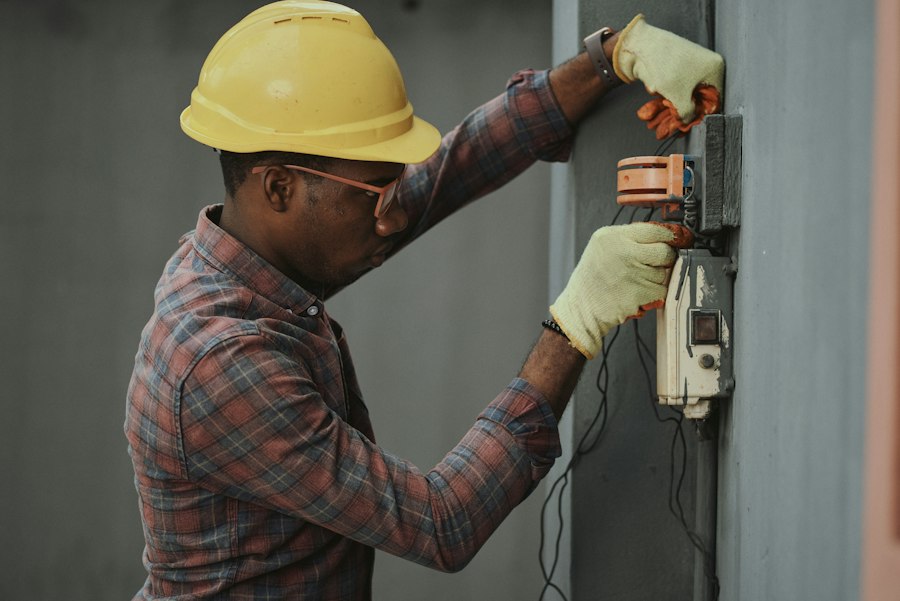 Repair Call · Flemington, NJ
Electrical symptoms often look scarier than they are. A dead outlet is usually a straightforward fix. A warm outlet plate is not. Pick the closest match on the right and we'll show you the most likely causes and how we'd approach it.
This is a starting point, not a diagnosis. For anything urgent, or if you're seeing a warm outlet, burning smell, or repeated breaker trips, call (908) 751-4227.
Not every repair, but a real snapshot of the calls that come into our Flemington shop every week.
Loose wire in the box, tripped GFCI upstream, failed receptacle, or a break in the circuit somewhere. We trace it back to the source, replace the device, and confirm the fix with a load test.
Typically fastCould be a loose bulb, a bad dimmer, a loose neutral in a junction box, or something deeper in the panel. Flickering across multiple rooms usually points to a service-side issue.
Varies by causeOverloaded circuit, short circuit downstream, ground fault, or a failing breaker. We diagnose the actual cause instead of just replacing the breaker and hoping.
Same-day fixLoose connection creating arcing, failing dimmer, or a load compatibility issue with LEDs. Never ignore buzzing electrical devices, that's the sound of something starting to fail.
Address promptlyLoose internal connection heating up under load. Common with aluminum branch wiring but also happens with backstabbed connections in older homes. Always fix, never ignore.
Fix immediatelyPart of the house dark while the rest works, and JCP&L isn't reporting an outage. Usually a tripped breaker, a service-side neutral issue, or a break somewhere in the circuit.
Same-day priorityBulbs that die in weeks in the same fixture. Usually a loose connection at the socket, a voltage issue on that circuit, or a wattage mismatch with the fixture rating.
Simple diagnosisMoisture in the box, a genuine ground fault downstream, or a failed GFCI device. Common on outdoor outlets after rain and on older bathroom GFCIs that have reached end of life.
Fast fixRural properties get outdoor damage from weather, rodents, and landscaping equipment. Landscape lighting failures, dead exterior outlets, and shorted underground runs to barns or workshops.
Site-specificElectrical repair can feel like a magic trick to homeowners: an electrician shows up, pokes around with meters and testers, and somewhere along the way tells you what's wrong. It's not magic. It's a repeatable process, and we walk you through it in real time.
Every repair diagnosis follows the same four steps. You'll see us do each one on your own house, and we'll explain what we're seeing at each step. You don't get a bill for "diagnosed an electrical issue." You get a bill that shows what we found and what it took to fix it.
First step is confirming the symptom. Show us the dead outlet, the flickering light, the tripping breaker. Sometimes the symptom is intermittent and we have to wait for it to happen or induce it. That's normal.
We identify which breaker controls the affected devices, then trace the circuit back to the panel. Voltage testers, tone generators, and infrared thermal cameras let us find what's happening inside walls without opening them.
The symptom points to a location. The location points to a cause. We open the specific box, switch, or fixture, find the loose wire or failed device, and confirm it's actually the problem before we commit to a fix.
Written quote before any repair work. Fix executed, then verified with load testing. GFCI and AFCI tested where applicable. You watch us confirm the problem is actually solved before we pack up.
Most repair calls are exactly what they look like: a specific problem with a specific fix. But sometimes the symptom is a warning about something systemic, and doing just the surface repair would be dishonest.
When we find one of these situations, we tell you clearly, explain what we're seeing, and give you options. We don't scare you into unnecessary work, and we don't pretend a serious issue isn't there. Here are the flags that turn a simple repair into a bigger conversation.
If you're seeing any of these, call (908) 751-4227.
One warm outlet is a repair. Warm outlets in three or four rooms usually means aluminum branch wiring, aging connections throughout, or an overloaded system. That's a rewire or panel conversation.
If your repair calls involve breakers that don't reset properly on a Federal Pacific Stab-Lok or Zinsco panel, the panel is the problem, not the individual breaker. See our panel upgrades page.
Isolated flickering in one room is a circuit-level repair. Flickering everywhere in the house usually means a service-side issue: loose service entrance conductors, a failing utility connection, or a bad neutral. Requires JCP&L coordination.
If we open a box on a repair call and find original knob-and-tube or ungrounded cloth-wrapped wire, we can do the immediate fix, but a real conversation about a whole-home rewire is warranted.
Not every repair is an emergency, and not every repair can wait a week. Here's how we prioritize the calls that come in.
Burning smells, sparking outlets, warm-to-hot outlet plates, smoke, a breaker that won't reset, or partial power loss with no obvious cause. Anything with an active fire or shock risk.
Dead outlets, buzzing switches, repeat breaker trips without other symptoms, GFCIs that won't stay reset, dead exterior outlets. Anything not creating an active hazard but not something you want to sit on either.
Flickering that only happens with a specific appliance, one bulb burning out fast, a switch that feels slightly loose, a diagnostic on something intermittent. Repairs that would be helpful but aren't urgent.
Three repair calls we've handled recently. Different symptoms, different diagnoses, different fixes.
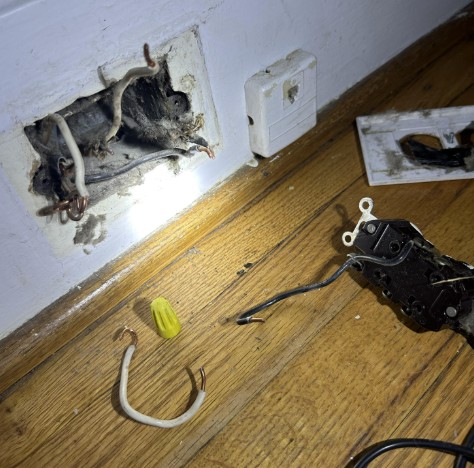 Backstabbed Failure
Homeowner had two dead outlets in a bedroom that had worked the day before. Traced back to a backstabbed connection at an outlet three rooms away where the wire had finally slipped out of the spring clip after 60 years. Rewired all outlets in the daisy chain on proper screw terminals. Two-hour job. Recommended checking the rest of the house on a future visit.
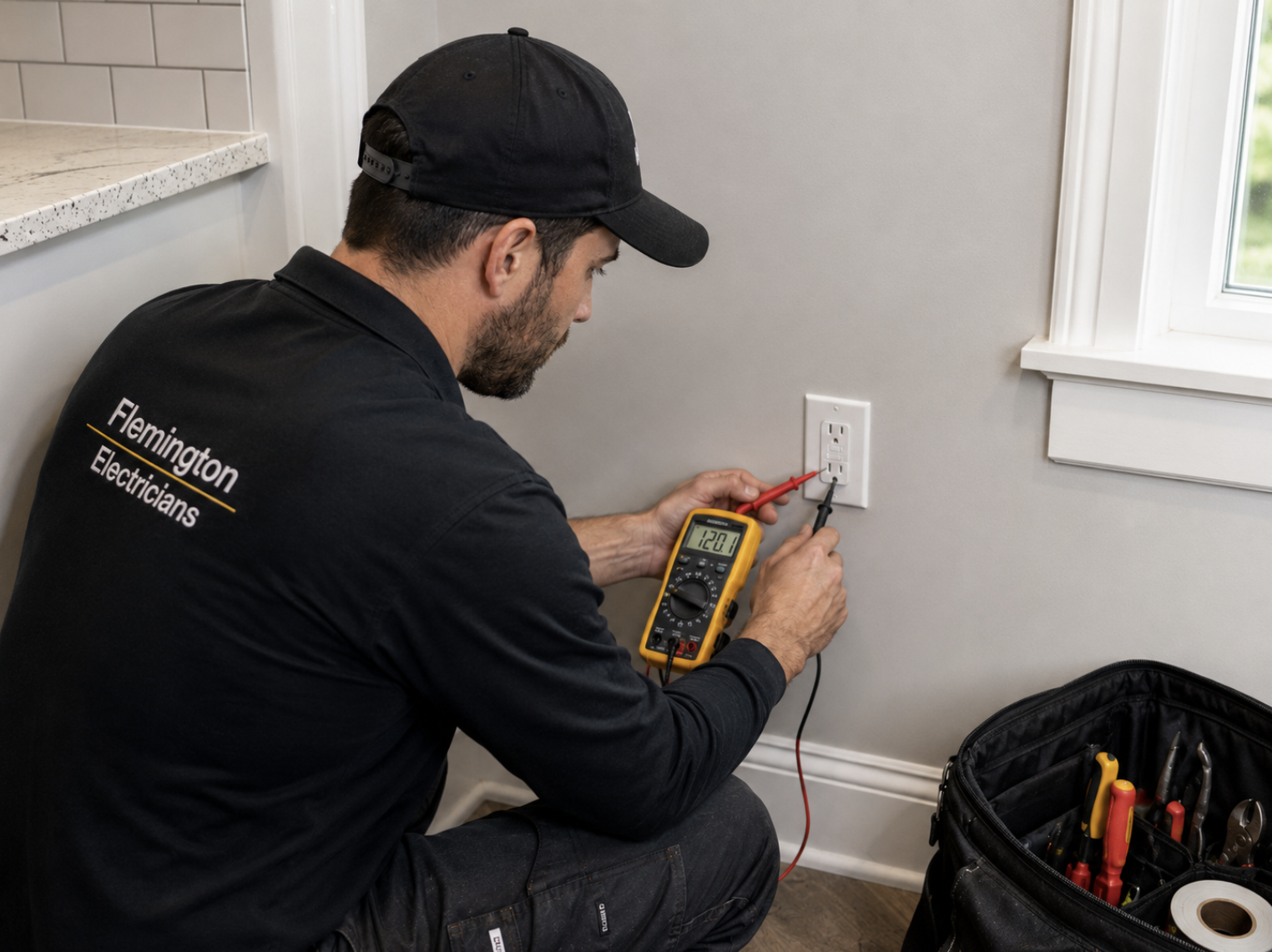 GFCI Trip Repair
Property off Route 523 had outdoor outlets tripping their GFCI immediately every time the homeowner reset. Diagnosed as moisture in a downstream junction box where the outdoor cable ran to a shed. Dried it out, replaced the box with a weatherproof rated cover, added a drip loop on the cable. Fixed for good, one-hour visit.
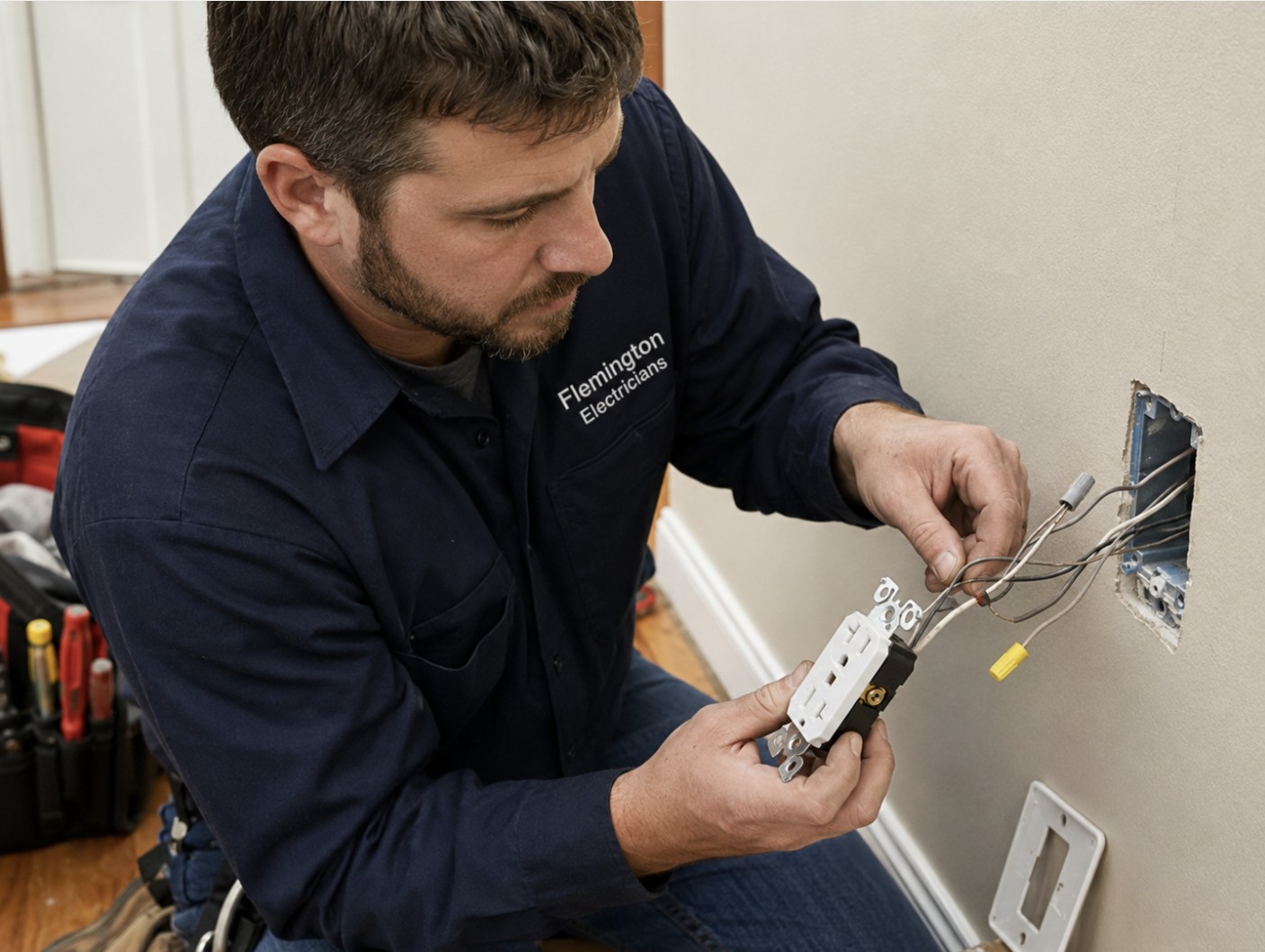 Warm Outlet Fix
1971 split-level with a bedroom outlet that felt warm when a space heater was plugged in. Aluminum branch wiring throughout the bedrooms, connection at the outlet had oxidized and was overheating. Replaced with an AlumiConn crimped connection and an aluminum-rated receptacle. Recommended full aluminum assessment for the rest of the house. Homeowner scheduled a follow-up.
Four things that consistently come up in reviews from customers we've done repair work for.
We find why the symptom is happening, not just replace the visible part and hope. A dead outlet that was really a loose connection three boxes away gets fixed at the source.
The written quote is the written quote. If we find something else worth mentioning, we mention it as a separate conversation for later, not as a mid-job upcharge on today's ticket.
You watch us diagnose. We explain what we're seeing. When the fix is done, we show you it's actually working under load. No mystery, no upsell.
Every repair starts with a written itemized quote before we start actual work. Diagnostic fee disclosed up front. The price you see is the price you pay.
Genuine electrician confession: a real chunk of our repair calls end up being something the homeowner could have fixed in 60 seconds. A tripped GFCI in a distant bathroom, a dimmer set too low, a bulb that had backed itself loose in the socket.
We'd rather you try these first and only pay us to come out if it's actually something. If you check all of these and still have a problem, that's when to call us.
Dead outlets often trace back to a tripped GFCI in a different room. Kitchens, bathrooms, garages, outdoor outlets, and basement outlets are the usual suspects. Press "reset" on every one.
Some tripped breakers move only slightly toward the OFF position and look almost normal. Push each one firmly to OFF, then back to ON. If one won't stay ON, stop and call us.
Fixture problems often turn out to be bulb problems. Try a different working bulb from another fixture. If the problem follows the bulb, it's the bulb. If the fixture still doesn't work, call us.
Bedrooms and living rooms often have one or two outlets controlled by a wall switch (for a lamp). If that switch is off, the outlet's dead but the wiring is fine.
Partial power loss sometimes means JCP&L is having issues. Check jcp-l.com or call 1-888-544-4877 to confirm no outage in your neighborhood before you call us.
Repair pricing is more variable than any other electrical service because it depends on what we actually find. A dead outlet that turns out to be a loose wire behind the plate is a quick, affordable fix. A dead outlet that traces back to a hidden failure inside a wall three rooms away is a longer job.
What we can tell you: there's a diagnostic fee that covers the trip out and the first hour of troubleshooting, disclosed up front before we head to your address. After we identify the actual cause, you get a written itemized quote for the repair before any work starts. If the fix is straightforward and takes less time than expected, you don't pay for time we didn't use.
For ballpark ranges on common repairs, our services hub has typical pricing.
Depends on urgency. Anything with active hazard (burning smell, sparking, warm outlets, breaker won't reset) gets routed through our 24/7 emergency dispatch. Non-emergency repairs like dead outlets and buzzing switches get same-day or next-day appointments in most cases. Fully scheduled diagnostics can be 3-7 days out depending on our current book.
For the initial diagnosis, yes. You need to be able to show us the symptom and answer questions about when it started and what triggers it. After we've quoted the repair, some jobs can happen while you're at work as long as we have access to the panel and the affected area. We'll work it out with you.
Usually not. A single dead outlet with no other symptoms (no smell, no warmth, no sparking, no other outlets affected) is almost always a straightforward repair that can wait a day or two. If the dead outlet is accompanied by burning smells or if multiple outlets went out at once, that's different, call our emergency line.
Four possible causes: 1) overloaded circuit (too many high-draw devices at once), 2) short circuit somewhere in the wiring, 3) ground fault (current leaking to ground), 4) failing breaker. The right response depends on which one it is. We diagnose the actual cause instead of just swapping the breaker and hoping. Our circuit breaker repair page has more detail.
We tell you clearly, on the spot, what we're seeing and what it means. You get options: do just the immediate fix and revisit the bigger issue later, or address the bigger issue while we're already on site. We don't force the bigger job, and we don't hide the fact that it exists. Honest information, you decide.
Yes, but the amount and terms are disclosed before we come out, and the diagnostic fee often rolls into the repair total if you proceed with the work. What we don't do is spring "we found something else" charges at the end. Written quote before any repair work starts.
For simple things (tripped GFCI, tripped breaker, loose bulb, wall switch check) absolutely yes. The "Try First" section above covers those. For anything that involves opening a device, dealing with visible wiring, or troubleshooting inside the panel, call us. Electrical work has real risks and NJ code limits what non-electricians can legally do to their own homes anyway.
Small repairs to existing devices (replacing a failed outlet, switch, or GFCI in the same location) generally don't. Anything that involves running new wire, adding circuits, or changing the electrical system in a meaningful way does require a permit under the NJ Uniform Construction Code (UCC, N.J.A.C. 5:23). We handle the paperwork when it applies.
A real person picks up. We come out for a real diagnosis and a written quote. Only the work you actually need.
(908) 751-4227