Do Nothing
- No upfront cost
- No maintenance
- Well pump stops (no water)
- Septic ejector stops (raw sewage)
- Sump pump stops (flooded basement)
- Refrigerated food and medication ruined
- Home office unusable
Standby generator installation for homes that can't sit through a 3-day JCP&L outage. Generac, Kohler, Briggs & Stratton, and Cummins. Sized correctly for what you actually need to run, with the automatic transfer switch, permit, and inspection all handled.
JCP&L serves roughly 61,000 customers in Hunterdon County. Rural stretches of Readington, Clinton Township, Tewksbury, Union Township, and Franklin Township sit at the ends of long tree-lined feeders that lose power fast in a Nor'easter, ice storm, or remnant tropical system.
After the July 2021 storms, only about 80% of Hunterdon customers had power restored by the end of the first day. The rest waited into day two, and some rural pockets sat dark for three or four days. That's the reality of living on 2 acres in Whitehouse Station or Cushetunk or the back roads off Route 517.
For most homes it's an inconvenience. For homes on well water, septic ejectors, sump pumps, home offices with client deliverables, medical equipment, or refrigerated food and medication, it's a real problem. That's why whole-home standby generator installation has become our second most-requested service across the county.
Sizing correctly is the single most important decision on a standby generator install. Undersize it and it can't run what you need. Oversize it and you're paying for capacity you'll never use.
Check the loads you'd want to run during an outage. The tool adds them up and recommends a sensible generator size with real headroom built in. It's a starting point for the conversation, not a final quote.
For a real load calculation on your actual home, call (908) 751-4227.
Three options for handling multi-day outages in Hunterdon County. Each has a real trade-off.
Five stages, start to finish. Some installs run tighter than others depending on site conditions.
We come out, look at your house, check property lines, gas or propane routing, and where the generator will physically live. Setback compliance verified here.
NEC-based load calc based on your actual home and what you want to run. This is what determines the right kW size, not a guess or a "most people get this size" answer.
Electrical permit filed with your township construction office. Zoning officer sign-off if needed for setback questions. Fuel-side permit if plumbing work is involved.
Concrete pad poured or composite pad set, natural gas or propane line run to the unit, automatic transfer switch (ATS) wired to your electrical panel, generator lifted into place.
Startup, load test, transfer switch verification, weekly exercise cycle set. Inspector comes out for sign-off. You get a walkthrough on the unit and paperwork.
The most important number in your standby generator installation isn't the brand on the door. It's the kW output rating and whether it actually matches your home's loads.
An undersized generator won't start your central AC, will trip on a well pump start, and will overload the moment your fridge cycles on while the furnace is running. An oversized generator is money you spent on capacity you'll never use, plus higher fuel consumption during exercise cycles.
We run a real NEC-based load calculation based on starting amperage (not just running amperage) of your biggest loads. Motors like well pumps and AC compressors draw 3 to 6 times their running amperage during startup, and that's what a properly sized generator has to handle.
A 14 kW unit on a home with 3-ton AC, a 1 HP well pump, a septic ejector, and a full fridge/freezer combo is not enough. When the AC kicks on, everything else browns out. Homeowner ends up disappointed and blames the brand.
A 26 kW unit on a small ranch with electric baseboard heat, no AC, and a shallow well is overkill. You spent thousands extra and now burn extra propane every week when it self-tests.
For most Hunterdon County homes on 1 to 5 acres with well, septic, central HVAC, and modern appliances, the right sizing lands somewhere between 18 and 24 kW with load management for the biggest loads.

We're not tied to one manufacturer. Each has strengths. The right pick depends on your budget, fuel type, and how important service network reach is to you.
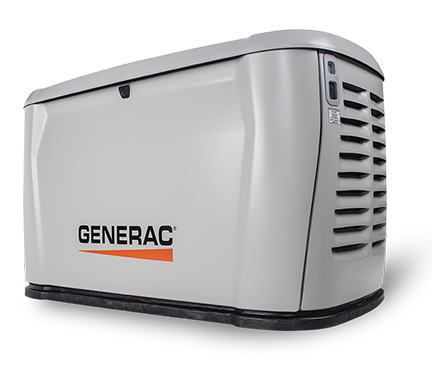
The market leader by a wide margin. Broad model range from 10 kW essentials up to 26 kW whole-home. Massive dealer and service network across NJ. Wi-Fi monitoring standard on newer models.
Heavier build quality, better noise dampening, longer stated engine life on comparable models. More expensive up front but often the choice for homes running the generator hard during long outages.
Solid mid-tier option, especially for essential-circuit installs where you're not powering the whole house. Simpler engine platform. Less dealer support in this region than Generac or Kohler.
Better known for commercial and industrial standby units, but their residential line (RS and QuietConnect series) is quiet, reliable, and well-built. Larger footprint than Generac equivalents.
The most common reasons we get calls for generator installation across our service area.
Every large property in Readington, Union Township, or western Clinton Township runs on a well and a septic ejector. No power means no water and no waste disposal, which makes a 2-day outage feel like camping in your own house. Standby generator is the fix.
Since 2020, remote work has meant that a JCP&L outage isn't just an inconvenience, it can mean missed deadlines and lost billable hours. A standby generator with a small ATS-managed subset of circuits keeps the home office up without powering the whole house.
CPAPs, oxygen concentrators, insulin refrigeration, and dialysis-adjacent equipment all require reliable power. For families with medical dependencies, a standby generator moves from "nice to have" to essential. We often size these installs conservatively for peace of mind.
Detached structures with their own subpanel (workshops with tools, barns with livestock heat lamps or fans, in-law suites) sometimes get their own smaller generator or extend from a larger main-house unit through the ATS.
Older homes in downtown Flemington, the Town of Clinton, or historic Whitehouse have real challenges with generator placement, setback compliance, and gas line routing. We work through these constraints with the township zoning officer.
Homeowner already lived through a multi-day outage running an extension cord out to a portable, and decided never again. Upgrade path is straightforward, and the existing gas or propane line often works for the new unit.
In Hunterdon County, natural gas availability drops sharply outside of Flemington Borough and the more built-up parts of Raritan Township. For most rural addresses, propane is the practical choice.
Fed from your utility gas line. No refills, no tanks to manage. If you already have natural gas service to the house, this is almost always the right choice for a standby generator. Unlimited runtime as long as the utility gas system stays up (which, unlike electric, rarely goes down).
Available reliably in Flemington Borough, downtown Clinton, downtown Lambertville, and the older parts of Raritan Township along Route 12 and Route 31.
Fed from a dedicated propane tank on your property. Standard for rural Hunterdon addresses where natural gas doesn't reach. Runtime is limited by tank size, so most whole-home installs use a 500-gallon or 1,000-gallon tank for meaningful runtime during multi-day outages.
Common propane suppliers in this area handle the tank installation and refills. We coordinate the connection between the tank and the generator.
NJ standby generator installations have to comply with the manufacturer's clearance specs, the National Electrical Code (NFPA 70), and your municipality's zoning setbacks. We handle this in the site survey.
Under NJ law, standby generators are a permitted accessory use in residential zones with reasonable setback rules. Your zoning officer can't unreasonably block a compliant installation, and the minimum residential setback threshold in most cases is 5 feet from side and rear property lines.
See our full service area for coverage detail.
NJ minimum for side and rear yard setback on a compliant installation. Front-yard placement not allowed without express township approval.
Per manufacturer spec and NFPA 37. Exhaust from the unit can't be directed toward a window, door, or fresh-air intake within 5 ft.
Typical Generac spec, which many other brands mirror. Enough for service access and manufacturer thermal clearance from combustible siding.
For airflow and service access. Shrubs, trees, and vegetation cleared back. Prevents heat buildup and lets a tech reach the unit for annual service.
Enclosed or restricted airflow spaces overheat the unit and create carbon monoxide hazards. Manufacturer voids warranty. Inspector will fail it.
Three installs we've completed recently. Different homes, different sizes, different fuel.
22 kW Generac
3-acre property off Pleasant Run with a well, septic ejector, 4-ton heat pump, and a home office. Generac 22 kW Guardian unit on propane, tied to an existing 500-gallon tank the propane supplier already had installed. Permit filed with Readington, setback approved, inspection cleared first pass.
14 kW Kohler
Historic Victorian near Main Street with tight setbacks and a natural gas connection already in place. Kohler 14RCA unit sized for essentials only (fridge, HVAC blower, sump, lights, small office). Coordinated placement with the Flemington Borough zoning officer to clear the setback question.
26 kW Generac
5-acre modern home near Spruce Run Reservoir with a heat pump, hot tub, pool equipment, EV charger, and family that runs a lot of electric appliances. Generac 26 kW on a new 1,000-gallon propane tank. Load-managed EV charger and hot tub so the smaller loads always have priority.
Whole-home standby generator installation is a significant investment, and every install is different. We give you a written, itemized quote after we've done the site survey and load calculation. What you see is what you pay.
Almost every install includes: the generator unit itself, the automatic transfer switch, the concrete or composite pad, wiring from the ATS to your panel, gas or propane line hookup, permit, and inspection coordination. What shifts the price up or down is unit size, fuel type, tank rental or purchase, distance from the panel, and whether your existing electrical panel needs an upgrade to accommodate the ATS.
For ballpark ranges, our services hub has typical pricing on common jobs.
Most residential installs take one to two days on site once the permit is issued and the generator has arrived. From your first call to the completed install, expect 2 to 6 weeks depending on generator availability, propane tank scheduling if needed, and township permit turnaround (typically 20 business days under NJ UCC).
Yes. Under the NJ Uniform Construction Code (UCC, N.J.A.C. 5:23), electrical permits are required for the ATS and generator wiring, and mechanical or plumbing permits may be needed for the gas or propane line. We file everything with your township construction office and handle inspection scheduling. Zoning officer approval may also be needed for setback compliance.
Both are common. Whole-home installs (20 kW and up) power everything through a 200-amp ATS. Essentials-only installs (10 to 16 kW) power a smaller set of critical circuits through a smaller ATS tied to a dedicated sub-panel. What's right for you depends on your loads, your budget, and what you actually can't live without.
Once a year at minimum. Annual service includes oil change, oil filter, air filter, spark plug inspection, battery load test, and confirming the exercise cycle runs correctly. Skipping annual service is the #1 reason generators fail when you actually need them. Our generator repair and service page has details.
Modern residential standby units run about 65 to 70 dBA at 23 feet during normal operation, which is about the same as normal conversation. Kohler and some premium Generac models run quieter. During the weekly exercise cycle you'll hear it. During an actual outage, so will everyone in the neighborhood.
Not without upgrading the panel first. An ATS integrates directly with your main service panel, and installing one on a Federal Pacific Stab-Lok or Zinsco panel is a code violation, insurance red flag, and a legitimate safety issue. We recommend combining a panel upgrade with the generator install so both happen under one permit.
In rural Hunterdon County, absolutely. Homes on well and septic with an installed standby generator sell faster and often for a meaningful premium over comparable homes without one. Real estate agents in this area routinely list "whole-home generator" as a feature. Save the paperwork and receipts, buyers will ask.
We respond to generator failures during active outages regularly. Most of the time it's a battery, a fuel issue, a stuck exercise cycle, or an ATS problem, and we can get the unit running on site. If your generator is under our service plan, we prioritize your call during outage events. Call our 24/7 emergency line any time.
A real person picks up. An electrician comes out for a real site survey and a written quote. No pressure to buy.
(908) 751-4227