You Can Live in the House

Whole-Home Rewiring in Flemington & Hunterdon County, NJ

Knob-and-tube replacement, aluminum branch wiring remediation, and full electrical modernization for older Hunterdon County homes. Phased so you can stay in the house, planned to preserve historic finishes, permitted through your township, and done to current NEC code.

Phased approach Historic-home experience Insurance-friendly Permit handled
Why We Rewire More Homes in Hunterdon Than Anywhere Else in NJ

Older Housing Stock, Two Wiring Problems, Same County

Hunterdon County holds one of the highest concentrations of pre-1940 housing in central New Jersey. The Flemington Historic District alone stretches from the 1756 Fleming Castle at 5 Bonnell Street to the 1829 Federal duplex at 181-183 Main Street to the Greek Revival Doric House at 114 Main Street. Similar stock fills the Town of Clinton, Lambertville, Frenchtown, and the older hamlets of Whitehouse and Stanton.

Every one of those homes was originally wired with knob-and-tube, the standard method from about 1880 through the 1940s. A lot of that original wiring is still in place, hidden inside walls that were plastered over generations ago.

The county has a second wiring problem too. Between roughly 1965 and 1973, when copper prices spiked, builders switched to aluminum branch wiring throughout new construction. Mid-century Raritan Township, Readington, and Clinton Township subdivisions from that era are full of it. According to the US Consumer Product Safety Commission, homes with aluminum branch wiring are 55 times more likely to have at least one outlet connection reach fire-hazard conditions compared to copper.

Both problems are fixable. Neither is worth ignoring.

Historic Federal-era home in the Flemington Historic District where original knob-and-tube wiring is being replaced with modern NM-B cable Historic Rewire · Flemington, NJ
What's In Your Walls?

Not Every Old Home Needs a Rewire. Let's Figure Out What You Actually Have

Age alone doesn't determine whether you need a rewire. A 1920s Flemington home may have been fully modernized in 1985 and be totally fine. A 1970s Raritan Township ranch may have aluminum branch wiring that's a real safety concern.

Answer 3 quick questions on the right and we'll give you a rough read on what type of wiring is likely in your walls, and what to actually do about it.

This is a starting point, not a diagnosis. For a real assessment, call (908) 751-4227 and we'll come look.

What year was your home built?
Likely Concern

Old wiring likely present

Get a Real Assessment: (908) 751-4227
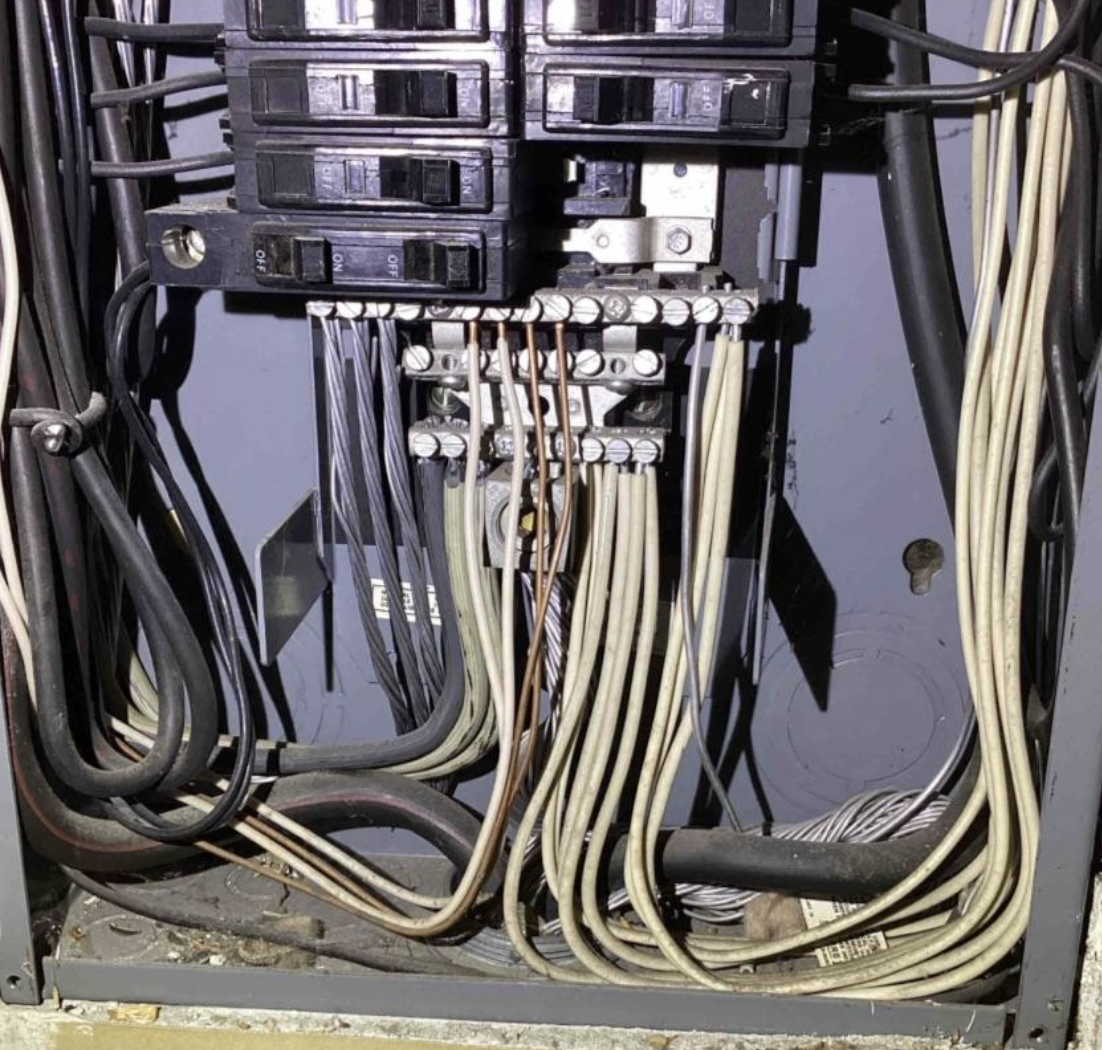
What Old Wiring Actually Looks Like

The Three Types of Older Wiring We Replace

Each has a different era, a different look, and a different level of urgency. Here's the honest breakdown.

1880 to 1940s

Knob-and-Tube

Individual copper conductors run separately through ceramic knobs (which anchor the wire) and porcelain tubes (which protect where wire passes through joists and studs). No ground wire, cloth or rubber insulation that dries and cracks over decades.

Why it's a problem: No grounding path, insulation deterioration, and it was designed for the electrical loads of a 1920s home (a few lights, a radio, maybe a fan). Modern appliances routinely overload it.
Many NJ carriers deny coverage
1965 to 1973

Aluminum Branch Wiring

Solid aluminum conductors instead of copper, used during the copper price spike of the late 1960s. Aluminum expands and contracts with heat more than copper, which loosens connections at outlets, switches, and junction boxes over decades of thermal cycling.

Why it's a problem: Loose connections heat up. Heated connections oxidize. Oxidized connections resist current more, which heats them up further. That cycle ends at outlets that feel warm, then discolor, then char.
55x higher fire-hazard rate
1940s to 1960s

Cloth-Wrapped Ungrounded

Copper conductors with cloth-and-rubber insulation, wrapped and bundled but without a ground wire. Better than knob-and-tube but still ungrounded. Common in the transition period before modern grounded NM-B cable became standard.

Why it's a problem: No grounding for modern 3-prong outlets or GFCI protection in kitchens and bathrooms. Insulation degrades but slower than knob-and-tube. Often mixed with later work in the same house.
Grounding upgrade needed
The Signs Aren't Always Obvious

Signs Your Home May Actually Need a Rewire

Some of these are dramatic, some are subtle. If you're seeing several of them together, take it seriously.

Only Two-Prong Outlets

Ungrounded outlets throughout the house are a strong indicator of pre-1960s wiring, often knob-and-tube or cloth-wrapped. Modern code requires grounded 3-prong outlets in every location.

Outlets or Switches That Feel Warm

Especially with aluminum wiring. A warm outlet or switch cover means the connections behind it are heating up. That's how fires start inside the wall.

Frequent Breaker Trips or Fuses Blowing

If the wiring is undersized for modern loads, the panel protects itself by tripping. Chronic tripping isn't just annoying, it's telling you the circuits are overloaded.

Flickering or Dimming Lights

Especially when a big appliance kicks on. A properly wired modern home shouldn't have visible dimming when the fridge starts up. It suggests undersized wiring or a loose connection somewhere.

Visible Cloth or Ceramic in Attic or Basement

Look up. Ceramic knobs and tubes running through joists in an unfinished basement or attic are the clearest visual sign of knob-and-tube. Cloth insulation on the wires themselves is another giveaway.

Insurance Non-Renewal Warning

Your insurance carrier sent an inspection letter, or a renewal notice with a wiring-upgrade condition. This is increasingly common in NJ. Most policies won't wait forever.

You Have Options

Full Rewire, Partial Rewire, or Phased? Depends on the House

The biggest misconception about rewiring is that it's an all-or-nothing tear-the-house-apart project. It doesn't have to be. Here are the three approaches we actually use.

Full Rewire, All at Once

Complete replacement in one push

Every branch circuit replaced from panel to devices in a single continuous project. Fastest total timeline (typically 1 to 3 weeks depending on home size), lowest total disruption because it's over quickly, and cleanest final result.

Requires the house to be at least partially disruptable during the work, so it's best when the home is between owners, during a renovation, or when you can stay elsewhere for part of it.

Best For

New buyers before move-in, active renovations, homes where insurance is threatening non-renewal.

Phased by Room or Floor

Manageable chunks over weeks or months

Broken into logical phases: attic-and-second-floor first, then main floor, then basement and kitchen. Each phase is done to completion before we move to the next, so power is stable in the rest of the house throughout.

The homeowner stays in the house the entire time. Rooms come back to service as we finish them. Kitchen and one bathroom prioritized so daily life keeps working.

Best For

Occupied historic homes, families with kids, homeowners who can't relocate during the work.

Partial or Targeted Rewire

Replace what's actually a problem

Not every old-wiring home needs a full rewire. If knob-and-tube is confined to one section or one circuit, or if aluminum branch wiring is only in the bedrooms, we can target the problem areas and leave verified-good modern wiring alone.

Requires a real assessment first to identify what's actually there vs. what's been modernized already. Some older Flemington homes have been partly redone over decades.

Best For

Homes with mixed wiring, previously renovated older homes, budget-conscious phased approach.

What the Process Looks Like

The Rewiring Process, Start to Finish

Every job runs through the same five stages, whether it's a full rewire in one push or a phased approach over months. The transparency matters because you're not just paying for wire, you're paying for careful planning that keeps holes small, finishes intact, and power stable.

For a real project timeline on your specific home, call (908) 751-4227 and we'll come do an in-person assessment.

1

Assessment & Wiring Audit

We physically inspect attic, basement, panel, outlets, and switch boxes to identify what's actually in the walls. Not every old home has old wiring throughout, some sections may have been modernized already.

2

Written Plan & Quote

Detailed scope: what gets replaced, what stays, whether the panel needs an upgrade too, phasing approach, wall-opening plan, permit and inspection sequence. Fixed written quote before any work starts.

3

Permit & Township Filing

Electrical permit filed with your municipal construction office (Flemington Borough at 38 Park Avenue, Raritan Township at One Municipal Drive, Readington at 509 Route 523 in Whitehouse Station, etc.). Rewires always require permits under NJ UCC.

4

Careful Execution

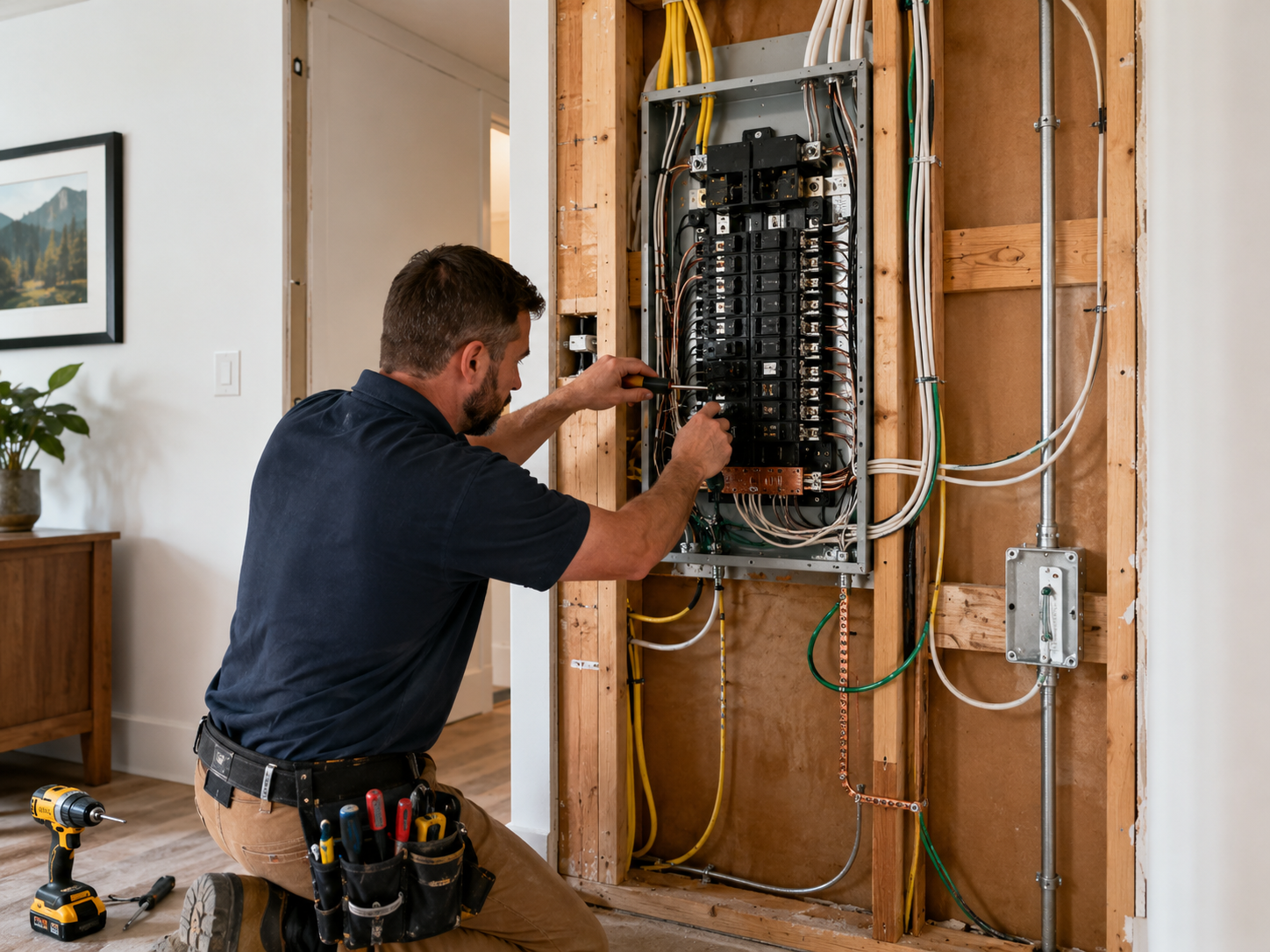
We fish new NM-B cable through existing wall cavities where possible to minimize holes. Openings only where absolutely necessary, patched to be paintable, historic trim removed and reinstalled where required. Power stays on in the rest of the house.

5

Testing, Inspection, Sign-Off

Every new circuit tested, GFCI and AFCI verified, panel directory updated. Township inspector comes out for final sign-off. You get all the paperwork for your insurance carrier and records.

The Question Everyone Asks

Yes, You Can Live in the House During a Rewire

The single most common question we get on rewiring calls: "Do we have to move out?"

Almost never. Our standard approach for occupied homes is phased execution: we do one section at a time, keep power stable everywhere else, and time the disruption around kitchen and bathroom use. Most families keep sleeping in their own beds, cooking in their own kitchen, and working from home the entire time.

What actually happens: some outlets are unavailable for a few hours to a day at a time. Some walls have small openings for a few days before they're patched. Furniture gets moved around within the room being worked on. The house never goes fully off-grid.

Kitchen & One Bathroom Stay Working

We phase the work so the kitchen and at least one bathroom keep functioning throughout. Cooking, showers, coffee, and Wi-Fi don't stop.

Bedroom Circuits Done in a Day Each

A typical bedroom circuit is one working day of rewiring. Outlets go out in the morning, come back on that afternoon or evening.

Wall Openings Kept Small & Patched

We fish through existing cavities and access holes wherever possible. When we do have to open a wall, the hole is small, drywall-patched cleanly, and paintable.

You Get a Daily Schedule

Before each work day, you know which rooms are being worked on, which outlets will be down, and what time power comes back on.


From the Field

Recent Rewires Across Hunterdon County

Three rewiring projects we've completed recently. Different homes, different problems, different approaches.

Full knob-and-tube replacement in a Victorian era home in downtown Flemington NJ Historic District Knob-and-Tube Removal
Downtown Flemington

Full Rewire on an 1890s Victorian

Home in the Flemington Historic District near Main Street with original knob-and-tube throughout. Insurance carrier had issued a non-renewal warning. Phased over 4 weeks, kitchen and main bathroom prioritized, historic trim removed and reinstalled at each opening. New 200-amp panel included. Insurance renewed on the spot when we finished.

Phased over 4 weeks Historic trim preserved Panel included
Aluminum branch wiring remediation in a 1970s Raritan Township NJ ranch home Aluminum Remediation
Raritan Township

Aluminum Branch Rewire in a 1971 Split-Level

1971 split-level with aluminum branch wiring throughout the bedrooms and living areas (kitchen had been redone in copper in the 1990s). Two warm outlets prompted the call. Full aluminum-to-copper replacement in the affected zones, kitchen left alone. Two-week job, family in the house the entire time.

Targeted zones Two-week timeline Occupied throughout
Partial rewire and grounding upgrade on an older Town of Clinton NJ Main Street home Partial + Grounding
Town of Clinton

Partial Rewire With Grounding Upgrade

1920s home on Main Street near the Red Mill area with mixed wiring: knob-and-tube in the attic and one bedroom, modernized cloth-wrapped elsewhere, all ungrounded. Replaced the knob-and-tube sections, added grounding conductors throughout, upgraded kitchen and bath outlets to grounded GFCI. Two-week phased job.

Mixed approach Grounding added GFCI upgrades
The Real Payoff

Insurance, Safety, and Resale Value After a Rewire

Beyond the safety, a completed rewire changes three real things about your home: insurance coverage, buyer confidence at resale, and code compliance for any future work.

Insurance Coverage Restored

NJ carriers routinely refuse to renew policies on homes with active knob-and-tube or aluminum branch wiring. A documented rewire clears the underwriting issue and gets you back to standard coverage terms, often with lower premiums than the high-risk pool you may have been paying into.

Resale Confidence

Home inspection reports flag knob-and-tube and aluminum wiring routinely. Buyers get spooked, ask for price concessions, or walk. A documented rewire with township sign-off paperwork removes that entire objection and often shortens time on market at a better price.

Modern Code Compliance

A rewire brings the whole system up to current NEC standards: grounding throughout, GFCI in wet locations, AFCI on bedroom circuits, tamper-resistant receptacles, dedicated circuits for kitchens and bathrooms. Every future renovation gets easier because the underlying system is right.

What This Costs

An Honest Conversation About Rewiring Cost

Rewiring is a real investment. It's also one of the most site-specific projects in residential electrical work, so we don't quote sight unseen. Anything we told you over the phone would be a guess that changes when we actually see the house.

What we can tell you: the biggest cost variables are the size of the home, how much of the existing wiring actually needs replacement (versus what's already been modernized), how accessible the walls and ceilings are, whether a panel upgrade is part of the scope, and how much historic finish preservation the job requires.

Every quote we give is written, itemized, and delivered on site after a real assessment. The price you see is the price you pay.

Common Questions

Frequently Asked Questions About Whole-Home Rewiring

Depends on the home and the approach. A full-push rewire on a typical 2,000 to 2,500 sq ft home runs about 1 to 3 weeks of active work. A phased rewire on an occupied home may stretch that to 4 to 8 weeks of calendar time with less intensity each week. Historic homes with plaster walls and preservation requirements take longer than modern drywall construction.

Yes, in almost every case. Our standard occupied-home approach is phased execution, room by room or floor by floor. Kitchen and one bathroom stay working throughout, power is stable in the rest of the house, and you get a daily schedule of what's happening and where. Very few rewires actually require the homeowner to relocate.

Yes. Under the NJ Uniform Construction Code (UCC, N.J.A.C. 5:23), any significant electrical work requires an electrical permit and inspection. Rewires always qualify. We file with your township construction office (Flemington Borough, Raritan Township, Readington, Clinton, etc.) and handle inspection scheduling.

Increasingly, yes. NJ home insurance carriers are getting stricter about knob-and-tube and aluminum branch wiring. Some refuse coverage outright, others charge substantially higher premiums, and some issue non-renewal notices with a rewire deadline. If you've received an inspection letter or renewal condition, deal with it before the deadline. Insurance non-renewal can create mortgage problems.

No. Modern rewiring technique focuses on fishing new NM-B cable through existing wall cavities, using attic and basement access to run vertically, and opening walls only at unavoidable pinch points. On a typical rewire we might open 6 to 12 small drywall access holes throughout an entire home, all patched and paintable. Historic plaster walls need more care but the principle is the same.

Usually yes, especially if you have an older 100-amp panel or a Federal Pacific or Zinsco. It's much more efficient to do both under one permit while we already have access to the panel. Our panel upgrades page has details on why panels get replaced.

We do this often on homes in the Flemington Historic District, Town of Clinton, Lambertville, and Frenchtown. Original moldings, trim, and plaster get preserved wherever possible. When trim has to come off, it comes off carefully and gets reinstalled at the end. Where we have to open plaster, we patch to a paintable finish. Historic character stays intact.

Sometimes. There's an approved AlumiConn or COPALUM crimped-connector remediation approach that replaces the connection at every outlet, switch, and junction box without pulling new wire. It's less expensive than full replacement, though insurance carriers vary in whether they accept it. We can quote both approaches so you can compare.

Ready to Talk About Your Home?

A real person picks up. We come out for a wiring assessment and give you a written quote with a real plan. No pressure.

(908) 751-4227
Open 24 / 7 · 160 Main St, Flemington NJ 08822